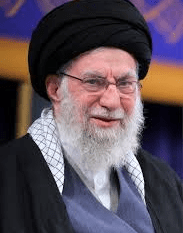

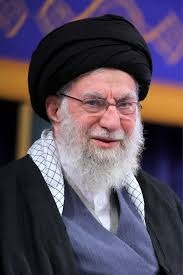
The reported killing of Ali Khamenei has led to confusion and uncertainty in the Middle East, as the region contemplates what follows after what could mark a potential turning point in the history of Iran and the wider Middle East. For more than three decades, Khamenei stood at the apex of Iran’s political and religious system, wielding ultimate authority over the armed forces, judiciary, intelligence services and strategic foreign policy.
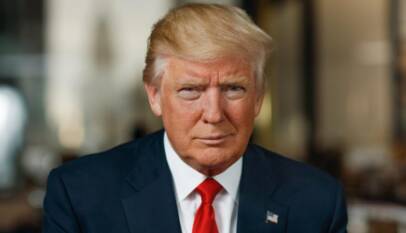
His removal, if definitively confirmed, does not automatically signal the collapse of the Islamic Republic, but it fundamentally alters the structure of power that has defined the Iranian state since 1989. The United States of America under President Donald Trump, who instigated the latest scenario, have stated that there would be no American boot on ground, a term that means the country would not send soldiers into Iran. Instead, Trump, who annoounced the launch of Operation Epic Fury from his Mar-a-Lago home once ran on no-war agenda in 2024.
Iran’s political system is uniquely constructed around the office of the Supreme Leader, whose authority supersedes that of elected officials. While presidents and parliamentarians come and go, the Supreme Leader shapes the long-term direction of the country. In theory, the Assembly of Experts is constitutionally mandated to appoint a successor.
In practice, however, transitions have historically been carefully managed to preserve regime continuity. The sudden loss of Khamenei during an active military confrontation places extraordinary strain on that process, particularly at a time when security concerns are paramount. It is against this background that there are fears in the region the fall of the regime could unlease crisis similar to the toppling of Sadam Hussein.
The immediate priority for Iran’s ruling elite would be maintaining internal cohesion. The Islamic Revolutionary Guard Corps, which functions as both a military and political powerhouse, would likely play a decisive role in ensuring stability. The Guard’s influence has expanded steadily over the years, embedding itself deeply in Iran’s economy, intelligence networks and regional strategy. In moments of uncertainty, it becomes the backbone of regime survival. Its actions in the hours and days following such a leadership vacuum would shape the country’s trajectory.
Three broad possibilities could emerge from this moment. The first is managed continuity, in which a successor is swiftly appointed from within the clerical establishment to preserve institutional order. This would likely signal that the regime intends to endure without fundamental change. In such a scenario, domestic security measures could intensify to deter unrest, while foreign policy remains assertive but calculated. The second possibility is a shift toward a more security-dominated system, with the Revolutionary Guard exerting stronger control behind a religious figurehead. This would tilt Iran further toward a militarized state model, potentially hardening its posture abroad while narrowing political space at home. The third and most volatile possibility is fragmentation, in which elite rivalries intersect with public dissatisfaction, creating internal instability and opening space for protests or broader political upheaval.
Domestically, Iran has faced significant pressure in recent years. Economic sanctions, currency depreciation and unemployment have fueled public frustration. Waves of protests have demonstrated that segments of society are willing to challenge the political establishment despite harsh crackdowns. The death of a long-standing leader could embolden opposition movements seeking structural reform or even systemic change. At the same time, it could prompt a severe security response designed to prevent exactly that outcome. The balance between repression and reform will depend largely on how unified the ruling elite remains during the transition.
Beyond Iran’s borders, the implications are equally profound. Tehran’s influence stretches across multiple conflict zones in the Middle East. It supports Hezbollah in Lebanon and maintains ties with Hamas in Gaza, as well as various militias in Iraq and actors in Yemen. A leadership vacuum in Tehran could temporarily disrupt coordination with these allies, but it could also provoke a surge in regional activity aimed at projecting strength. Proxy conflicts might intensify as a show of resilience, or they might pause while Tehran focuses inward.
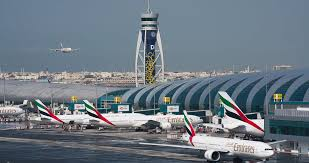
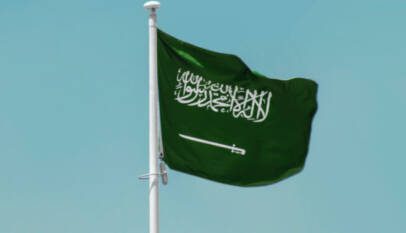
Regional rivals are watching closely. Countries such as Saudi Arabia and United Arab Emirates have long viewed Iran as a strategic competitor. While they may quietly welcome signs of Iranian weakness, they also fear instability that could spill across borders or disrupt vital oil routes. The Strait of Hormuz remains one of the world’s most critical energy chokepoints, and any disruption there would send shockwaves through global markets.
Global powers are similarly cautious. The United States is likely to prioritize deterrence and regional containment, seeking to prevent escalation while safeguarding allied interests and energy security. Russia, which values its partnership with Tehran, may offer diplomatic backing to preserve regime continuity. China, heavily reliant on Middle Eastern energy supplies, will emphasize stability above all else, avoiding overt involvement while protecting trade interests. The European Union is expected to call for de-escalation while preparing for economic ripple effects.
Ultimately, the death of Khamenei, if confirmed, represents both an end and a beginning. It closes a chapter defined by one man’s consolidation of religious and political authority. Yet it opens an uncertain period in which Iran’s institutions, security forces, and public will test the durability of the Islamic Republic’s design. Authoritarian systems often prove more resilient than anticipated, especially when backed by strong security structures. However, leadership transitions under external military pressure are inherently unpredictable.
For Iran, this moment could lead to tightened control and renewed ideological consolidation. For the Middle East, it could mean either a cautious recalibration of power or a dangerous escalation of long-standing rivalries. Much will depend on how swiftly and cohesively Iran’s elites manage succession, and whether the population views this transition as a continuation of the status quo or as a rare opening for change.