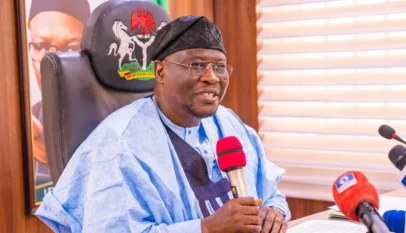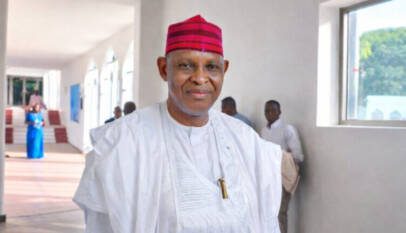

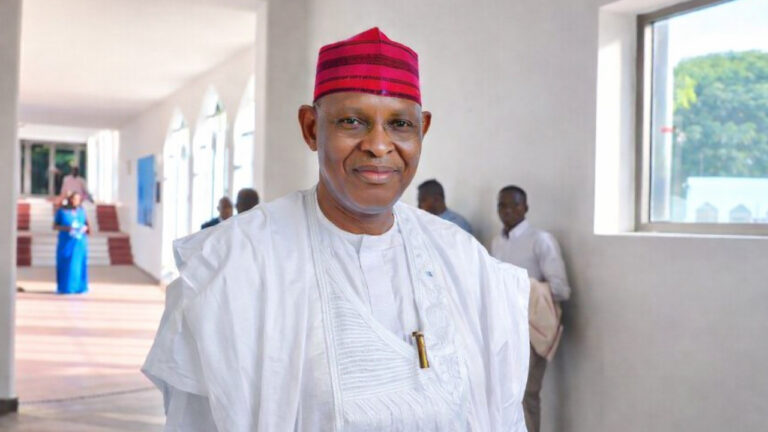
Photo: Gov Abba Kabir Yusuf
By Didimoko A. Didimoko
By the time history settles its dust, the resignation of Kano State Governor Abba Kabir Yusuf from the New Nigeria Peoples Party (NNPP) may be remembered not just as another defection, but as a loud warning bell for Nigeria’s opposition politics.
Defections are not new in Nigeria. What is new is the speed, scale and strategic timing with which the opposition is being hollowed out barely halfway into the political cycle. Kano, one of Nigeria’s most politically influential states, has now slipped from the opposition’s grip. That alone tells a much bigger story than party logos and press statements.
Power Has a Gravity of Its Own
Nigerian politics obeys a simple but uncomfortable law: power attracts power. Governors, lawmakers and party structures naturally drift toward the centre, especially when opposition platforms are fractured, cash-strapped or embroiled in endless litigation.
Governor Yusuf’s exit follows this familiar path. Officially, it is about internal crisis and leadership disputes. Unofficially, it is about relevance, access and survival in a system where federal alignment often determines political lifespan.
With the ruling All Progressives Congress (APC) now on course to control close to 30 states, the message being sent – subtly and sometimes not so subtly – is clear: the road to influence runs through the centre.
The Opposition’s Shrinking Map
In May 2023, opposition parties governed 15 states. Today, they control just seven. The Peoples Democratic Party (PDP) holds five; All Progressives Grand Alliance (APGA), the Labour Party, and the Accord Party manage one each.
This is not merely a numbers game. Governors control structures, delegates, funding streams and grassroots mobilisation. Lose them, and you lose the machinery required to win national elections.
The opposition today is not just smaller; it is weaker, noisier internally, and largely reactive.
Kwankwasiyya: Movement Without Power
Perhaps the most symbolic casualty of the Kano episode is the Kwankwasiyya movement led by Rabiu Musa Kwankwaso. Once celebrated for its discipline and grassroots energy, the movement is now facing the hardest test of all: relevance outside state power.
Kwankwaso’s call for loyalty and ideological consistency is noble, even refreshing, but Nigerian politics has never been kind to movements that lose access to state machinery. The real question is whether Kwankwasiyya can evolve into a long-term ideological opposition force or whether it will slowly bleed elites while retaining only symbolism.
History offers few comforting examples.
2027: Election or Endgame?
As 2027 approaches, the opposition faces three stark choices.
First, reform – fix internal democracy, end factional wars, and project ideological clarity.
Second, coalition – accept political reality and build broad alliances capable of challenging APC dominance.
Third, resignation – continue business as usual and hope for miracles.
So far, the signs point uncomfortably toward the third option.
The PDP remains trapped in old habits. Labour Party has struggled to convert 2023 enthusiasm into durable structures. Smaller parties are spectators in a game played by giants.
Is Nigeria Drifting Toward One-Party Dominance?
Nigeria is not a one-party state – yet. But democratic health is not measured by constitutional labels; it is measured by competitive choices. When voters repeatedly see politicians switch sides with ease and opposition collapse without a fight, cynicism grows.
Ironically, dominant parties often implode from within. Internal rivalries, succession battles and unchecked power have a way of creating their own opposition. Whether the APC will face that reckoning before or after 2027 remains an open question.
Kano as a Political Signpost
Kano is not just another state. It is a political compass. Its shift signals where the wind is blowing, and right now, it is blowing strongly toward consolidation of power at the centre.
For Nigeria’s opposition, the Kano defection is not just a setback; it is a mirror. It reflects years of poor organisation, weak ideology and failure to offer a compelling alternative.
Between now and 2027, the opposition must decide whether it wants to be a protest choir or a government-in-waiting.
Sunday after Sunday, that question will only grow louder.