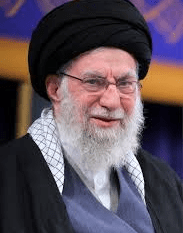

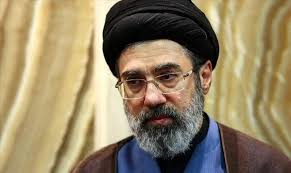
Photo: Mojtaba Khamenei, Iran’s new supreme leader
Iran’s elite military force, the Islamic Revolutionary Guard Corps, has warned that it will prevent oil shipments from leaving the Middle East if attacks by the United States and Israel continue.
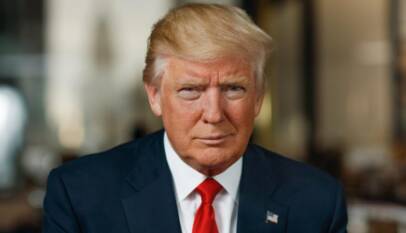
The warning on Tuesday triggered a strong response from US President Donald Trump, who threatened that Washington would retaliate far more forcefully if Iran attempted to block oil exports.
According to Reuters, the escalating rhetoric had little impact on financial markets, where crude prices fell and global shares rallied after Trump suggested the war might end soon.
The Iranian military body said it would not allow any oil to leave the region if attacks by the US and Israel persist.
“We are the ones who will determine the end of the war,” a spokesperson for the Revolutionary Guards said, describing Trump’s remarks as “nonsense,” according to Iranian state media.
Trump later reiterated his warning in a post on the social media platform Truth Social.
“If Iran does anything that stops the flow of oil within the Strait of Hormuz, they will be hit by the United States of America 20 times harder than they have been hit thus far,” he said.
Trump had earlier said the US had inflicted serious damage on Iran’s military and predicted that the conflict could end sooner than the four-week timeframe he had initially outlined, although he did not specify what victory would look like.
Meanwhile, Israel said its objective in the war is to bring an end to Iran’s clerical leadership.
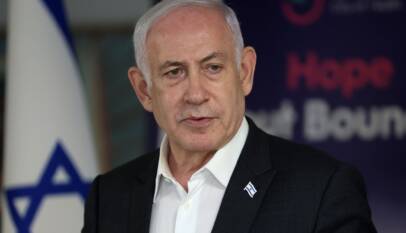
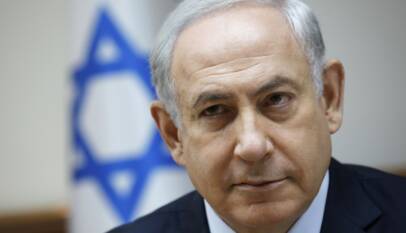
“Our aspiration is to bring the Iranian people to cast off the yoke of tyranny,” Israeli Prime Minister Benjamin Netanyahu said in a statement issued by his office on Tuesday.
“In the end, that depends on them. But there is no doubt that through the actions taken so far we are breaking their bones — and our hand is still extended,” he said.
“If we succeed together with the Iranian people, we will bring about a permanent end — if such things exist in the life of nations.”
Amid the escalating conflict, Iran on Monday appointed Mojtaba Khamenei as the country’s new supreme leader, succeeding his father Ali Khamenei.
Analysts say the move signals a further consolidation of hardline leadership in Iran during the crisis and appears to run counter to the interests of the Trump-led United States.
Trump has warned that US military action could intensify sharply if Iran attempts to block tanker traffic through the Strait of Hormuz, which handles about one-fifth of the world’s oil supply and is regarded as the most critical global oil export route linking Gulf producers to the Gulf of Oman and the Arabian Sea.
The conflict has already disrupted activity in the Strait, leaving oil tankers unable to sail for more than a week and forcing some producers to halt pumping as storage facilities reach capacity.
Brent crude futures fell by more than 10 per cent on Tuesday after surging by as much as 29 per cent on Monday to their highest level since 2022, while global stock markets rebounded.
The surge in fuel prices has also become a political issue in the United States ahead of the November midterm elections, where rising gasoline costs remain a major concern for voters.
A Reuters/Ipsos poll released on Monday showed that 67 per cent of Americans expect fuel prices to rise in the coming months, while only 29 per cent approve of the ongoing war.