
The Independent National Electoral Commission has proposed a budget of N873.78 billion for the conduct of the 2027 general elections, with major allocations earmarked for operations, technology and capital expenditure.
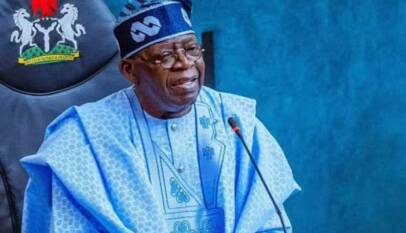
INEC Chairman, Prof. Joash Amupitan, presented the proposal on Thursday before the joint committee of the iSenate and House of Representatives on Electoral Matters at the National Assembly.
He clarified that the N873.778 billion required for the 2027 polls is separate from the Commission’s 2026 budget proposal, under which INEC plans to spend N171 billion on its operations, including by-elections and off-cycle governorship polls.
According to him, preparations for the 2027 elections have commenced in line with statutory provisions mandating that election funds be appropriated at least 360 days before the date fixed for the exercise. He said early appropriation would guarantee proper planning and seamless nationwide conduct of the polls.
Amupitan explained that although not all line items were exhaustively presented at the session, the proposed election budget is structured across five major components: N379.748 billion for operational costs; N92.317 billion for administrative costs; N209.206 billion for technological costs; N154.905 billion for election capital costs; and N42.608 billion for miscellaneous expenses.
He noted that the capital component is higher than in previous budgets because several items not adequately captured in earlier appropriations have now been consolidated into the 2027 election budget. Detailed breakdowns and explanations, he added, were contained in documents submitted to the committee.
The joint session was chaired by Senator Simon Bako Lalong and Hon. Adebayo Balogun.
The INEC chairman stated that the projected election budget does not include a fresh proposal by the National Youth Service Corps seeking an upward review of allowances for corps members engaged as ad hoc staff during elections.
He said the budget was prepared in line with Section 3(3) of the Electoral Act 2022, which mandates the Commission to prepare its election budget at least one year before a general election.
On the 2026 fiscal year, Amupitan disclosed that the Ministry of Finance gave the Commission a budget envelope of N140 billion, but INEC is proposing a total expenditure of N171 billion. The proposed 2026 spending includes N109 billion for personnel costs, N18.7 billion for overheads, N42.63 billion for election-related activities and N1.4 billion for capital expenditure.
He argued that the envelope budgeting system is not suitable for INEC’s operations, noting that the Commission often requires urgent and flexible funding to discharge its responsibilities. He also identified the absence of a dedicated communications network as a major operational challenge, saying that if INEC develops its own network infrastructure, Nigerians would be better positioned to hold it accountable for technical failures.
In his remarks, Senator Adams Oshiomhole said external agencies should not dictate INEC’s budgeting framework given the sensitive nature of its mandate. He urged that the envelope system be set aside for the Commission and that lawmakers should work with its actual requirements to prevent underfunding.
A member of the House of Representatives from Edo State, Billy Osawaru, called for INEC’s budget to be placed on first-line charge as provided in the Constitution, with funds released fully and promptly to enable proper planning and execution of its duties.
The joint committee approved a motion recommending a one-time release of the Commission’s annual budget. It also said it would consider the NYSC’s request for about N32 billion to increase corps members’ allowances to N125,000 each when deployed for election duties.
Chairman of the Senate Committee on INEC, Senator Simon Lalong, assured that the National Assembly would work closely with the Commission to ensure it receives the necessary support for the successful conduct of the 2027 polls.
Chairman of the House Committee on Electoral Matters, Rep. Bayo Balogun, also pledged legislative backing but cautioned the Commission against making commitments it may not be able to fulfil. He recalled that during the last general election, INEC gave strong assurances about uploading results to the INEC Result Viewing portal, creating the impression of real-time monitoring.
“Meanwhile, the IREV was not even in the Electoral Act; it was only in INEC regulations. So, be careful how you make promises,” Balogun warned.