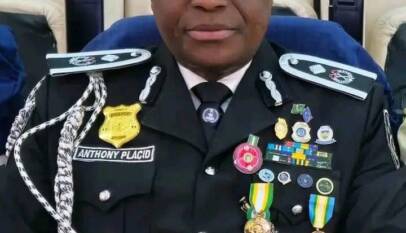

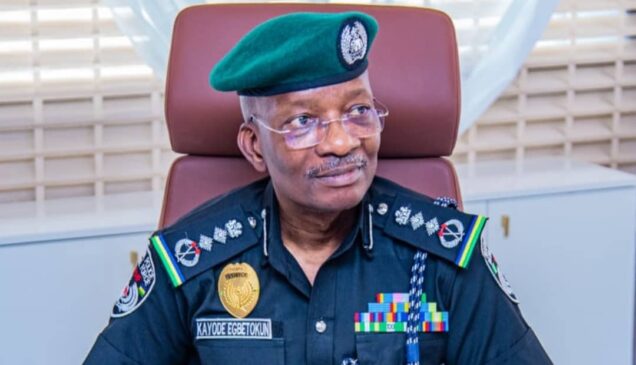
Nigeria’s Inspector General of Police (IGP) has been forced to resign from office, prompting the immediate appointment of a successor by the federal government.
In a statement issued on Tuesday, the Presidency confirmed that the resignation takes immediate effect and thanked the outgoing police chief for his service to the nation.
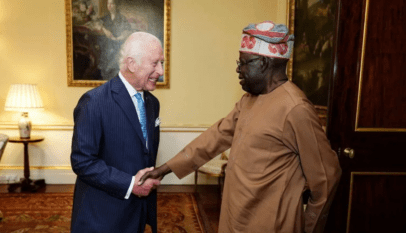
However, Naija Daily News learnt that President Bola Ahmed Tinubu invited Egbetokun to the Presidential Villa, Aso Rock, and directed him to resign immediately.
The statement did not elaborate on the reasons for the resignation but noted that the decision was taken in the interest of the Nigeria Police Force and national security.
It was learnt that Tinubu, exercising his constitutional powers, appointed former FCT Police Commissioner, Tunde DIsu, as the new man to lead the force. The newly appointed IGP, a senior officer with decades of policing experience, is expected to be sworn in following the formal decoration ceremony.
Government officials said the appointment aims to ensure continuity in security operations and sustain ongoing reforms within the police force.
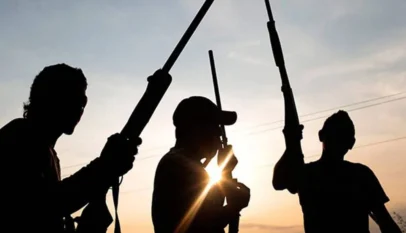
Security analysts say the leadership transition comes at a critical time, as Nigeria continues to confront challenges including insurgency, banditry, kidnapping and other violent crimes across several regions.
The outgoing IGP had overseen various reforms, including efforts to modernise policing operations, strengthen community engagement and improve inter-agency collaboration.
The new police chief is expected to outline his priorities in the coming days, with a focus on intelligence-driven policing, public trust and operational efficiency.
Further details on the transition are expected from the Police Service Commission.
Assessment of the Outgoing IGP’s Tenure
The outgoing Inspector General of Police leaves office at a time of complex internal security pressures, including insurgency in the North-East, banditry in the North-West, separatist-linked violence in the South-East, and persistent kidnapping-for-ransom nationwide.
During his tenure, he pursued reforms aimed at modernising policing operations, strengthening intelligence-led enforcement, and improving inter-agency collaboration. There were also efforts to expand tactical units, upgrade operational equipment, and deepen community policing initiatives.
However, critics argue that despite these reforms, insecurity remained widespread, with public confidence in the police still fragile. Concerns over human rights practices, slow response times, and structural inefficiencies within the force continued to draw scrutiny from civil society groups.
Overall, his tenure can be viewed as reform-oriented but constrained by systemic challenges, funding limitations, and the scale of Nigeria’s security threats.
Profile of IGP-designate Tunde Disu
The newly appointed IGP is a career police officer with decades of service across operational, investigative, and administrative roles within the Nigeria Police Force.
Colleagues describe him as methodical and operationally grounded, with a reputation for discipline and internal restructuring. His immediate priorities are expected to include restoring public confidence, improving intelligence gathering, strengthening internal accountability mechanisms, and enhancing cooperation with the military and other security agencies.
Security analysts say his success will largely depend on his ability to implement structural reforms, improve officer welfare, and adapt policing strategies to evolving security threats.
- Commissioner of Police (CP), Federal Capital Territory (FCT), Abuja
Oversaw policing operations in the nation’s capital, including strategic security coordination and crime prevention. - Head, Intelligence Response Team (IRT)
Led the elite tactical and investigative unit responsible for handling high-profile criminal cases, kidnappings and armed robbery operations nationwide. - Commander, Rapid Response Squad (RRS), Lagos State
Headed the Lagos RRS, a tactical unit focused on swift intervention, anti-robbery operations and urban crime control. - Deputy Commissioner of Police (DCP), Operations – FCT Command
Supervised operational deployments and coordinated security responses within Abuja. - Various Command and Tactical Assignments
Served in multiple operational, investigative and administrative capacities across state and zonal commands during his career progression.
These roles reflect extensive experience in tactical operations, intelligence-led policing and metropolitan security management.