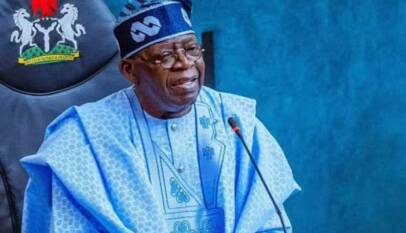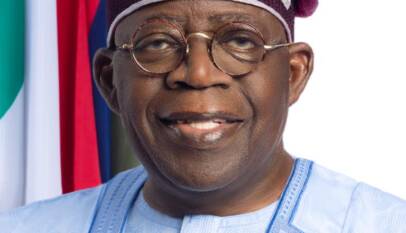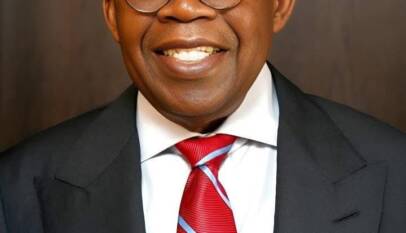

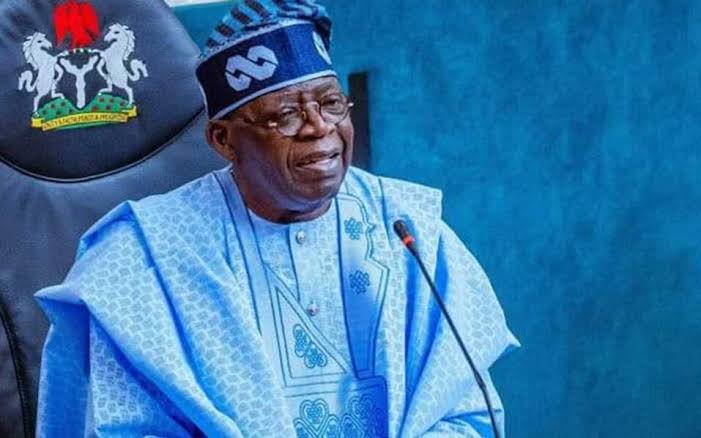
Photo: President Bola Ahmed Tinubu
By Austin Manekator
When former power holders publicly accuse serving security chiefs of grave misconduct, the real issue is not just politics. It is institutional credibility, command integrity, and public trust in the nation’s security architecture.
Nigeria’s security establishment has found itself at the centre of public controversy once again — this time not because of insurgency in the North East, where extremist violence has stretched military operations for more than a decade; not because of banditry in the North West, where villages continue to endure raids, kidnappings, and mass displacement; and not because of separatist tensions in the South East, where agitation and enforcement regularly collide in uneasy cycles.
Instead, the storm has emerged from within the political class itself, pitting former Kaduna State governor Nasir El-Rufai against the National Security Adviser, Nuhu Ribadu, in a confrontation that now tests institutional confidence at the highest level.
The allegations are weighty. El-Rufai has accused the Office of the National Security Adviser of the unlawful procurement of a toxic chemical, thallium sulphate. He has spoken of intercepted communications and implied abuse of national security powers. The NSA’s office has denied the claims. The Presidency has dismissed them as politically motivated. Meanwhile, the Economic and Financial Crimes Commission and the Independent Corrupt Practices and Other Related Offences Commission have invited El-Rufai for questioning over alleged financial improprieties during his tenure as governor, following a petition from the Kaduna State House of Assembly.
This is where the politics of national security becomes unavoidable.
In theory, the Office of the National Security Adviser is a coordinating institution. It advises the President on intelligence matters and harmonises operations among the armed forces, intelligence services, and law enforcement agencies. It is not designed to prosecute crimes. It does not function as a routine arresting authority. It exists to ensure strategic alignment across the security spectrum and to keep the system coherent under constitutional authority.
That is why accusations directed at the NSA carry unusual gravity. When a former insider alleges misuse of security authority, it strikes at the core of institutional neutrality. If such claims were ever substantiated, they would raise serious constitutional and ethical concerns. If they are unfounded, their public circulation still risks weakening confidence in the country’s security architecture.
Security institutions operate within political ecosystems. They are not insulated from rivalry, ambition, or suspicion. El-Rufai’s allegations surfaced at a time when he himself is facing investigation. He has publicly acknowledged invitations from anti-graft agencies. That context inevitably shapes interpretation.
Two narratives therefore compete in the public space.
One presents a whistleblower: a former senior official, familiar with the machinery of state, sounding the alarm about dangerous misconduct. The other suggests deflection: a politician under scrutiny escalating claims against powerful figures to redirect attention and shape public sympathy.
The truth may eventually rest clearly on one side. But beyond personal motives lies a deeper institutional concern: how does a democracy preserve the credibility of its security system while ensuring that no office operates beyond accountability?
National security work is, by nature, shielded by secrecy. Procurement processes, intelligence capabilities, and operational plans are often classified for legitimate reasons. That confidentiality protects national interest. Yet when allegations arise, secrecy can also breed suspicion. Without trusted oversight, citizens are left navigating between official denials and political accusations.
In more established democracies, this tension is managed through legislative intelligence committees, judicial review structures, and independent inspectors capable of examining classified matters without compromising operations. Nigeria’s oversight mechanisms exist in principle, but public confidence in their strength and independence is often debated. When disputes spill into open media confrontation, it signals that internal resolution channels may not command universal trust.
There is also historical memory in play. In 2013, El-Rufai accused then-President Goodluck Jonathan of placing him on what he described as a sniper list. The government denied the allegation. That episode intensified political polarisation during a sensitive national period. High-level security accusations rarely fade quietly. Even when rebutted, they tend to leave lingering doubt and deepen partisan suspicion.
The broader danger is the gradual politicisation of perception. Even where institutions act lawfully, repeated public clashes between political actors and security officials can create the impression of bias. In a country grappling with insurgency, banditry, and organised crime, perception alone can affect morale, coordination, and public cooperation.
Security systems rely not only on capability but also on confidence. Command structures must remain clear. Authority must flow from constitutional mandates, not partisan alignment. When disputes are framed primarily as personal battles, institutional reform becomes secondary to political theatre.
At the same time, national security cannot be placed beyond scrutiny. Accountability strengthens institutions; it does not weaken them. Investigations into allegations — whether against political actors or security officials — must be handled professionally and transparently within the bounds of national security protocols. If inquiries into El-Rufai’s tenure are perceived as fair and evidence-based, they reinforce the credibility of anti-corruption bodies. If any review of his claims against the NSA is conducted with seriousness and discretion, it can strengthen public trust rather than diminish it.
Nigeria’s security challenges remain real and pressing. Insurgent threats persist in parts of the North East. Banditry continues to disrupt livelihoods in the North West. Separatist tensions simmer in the South East. Organised criminal networks operate across regions. In such an environment, cohesion at the top of the security structure is critical. Public disputes at that level risk distraction. Yet suppressing debate is not the answer. Democracies mature when institutions withstand scrutiny without destabilisation.
This episode reveals structural questions that go beyond the individuals involved. Are oversight mechanisms sufficiently trusted? Is legislative supervision of intelligence coordination robust? Are anti-corruption investigations insulated from political interpretation? Can security institutions absorb public criticism and still function with stability?
These are not merely questions about Nasir El-Rufai or Nuhu Ribadu. They are questions about the architecture of state power.
The confrontation between El-Rufai and the National Security Adviser is therefore more than a headline clash. It is a test of how Nigeria manages the intersection between politics and national security. Institutions must remain larger than the individuals who occupy them. Political actors must weigh the consequences of invoking national security claims in public discourse. Investigative agencies must demonstrate independence beyond reasonable doubt.
In the final analysis, the strength of a nation’s security system is measured not only by intelligence capacity or firepower, but by the confidence citizens place in its neutrality, legality, and accountability. When politics collides with national security, democratic maturity is revealed in whether institutions emerge steadier, more transparent, and more resilient than before.