
The Nigeria Customs Service has intercepted 22 wraps of suspected cocaine weighing 25 kilograms and valued at about N1 billion, even as it unveiled plans to commence paperless operations before the end of the second quarter of 2026.
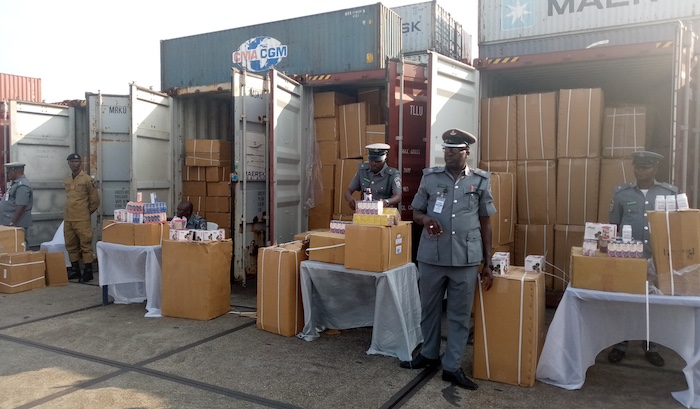
The Comptroller-General of Customs, Adewale Adeniyi, disclosed the seizure on Friday while parading the suspect alongside the contraband at the Federal Operations Unit, Zone A, Ikeja, Lagos. He was represented at the event by the Deputy Comptroller-General in charge of Enforcement, Timi Bomodi.
According to Adeniyi, the illicit consignment was intercepted in the early hours of Tuesday, February 10, 2026, at about 3:00 a.m. along the Badagry-Seme axis by operatives of the Seme Area Command. The drugs were concealed in a Toyota Highlander vehicle and intercepted following actionable intelligence.
“One suspect was promptly arrested in connection with the seizure,” he said, adding that the operation demonstrated the service’s resolve to safeguard the nation’s borders and protect society from narcotics trafficking in line with Section 55(1)(c) of the NCS Act, 2023.
He noted that in line with the provisions of the National Drug Law Enforcement Agency Act and the existing Memorandum of Understanding between both agencies, the suspected cocaine, the vehicle used for conveyance, and the suspect had been formally handed over to the NDLEA for further investigation and prosecution.
Receiving the items, the Commander of the NDLEA Lagos Strategic Command, Abubakar Liman Wali, commended Customs for the seizure and effective collaboration. He disclosed that the drugs have a street value of N40 million per kilogram.
Wali assured that the suspect and the contraband would undergo thorough investigation, field testing, and forensic analysis to ensure all those involved are brought to justice, reiterating the agency’s commitment to inter-agency cooperation in tackling cross-border drug trafficking.
Meanwhile, Adeniyi also announced that the Customs Service would transition to a fully paperless environment by the end of the second quarter of 2026. He made the disclosure in Lagos during the launch of the One-Stop-Shop initiative, a unified operational framework designed to centralize all risk interventions within a coordinated digital and physical system.
He explained that the first phase of the paperless initiative would cover core clearance, documentation, and approval processes, aimed at reducing physical interactions, enhancing data integrity, improving processing speed, and strengthening audit controls.
According to him, the One-Stop-Shop framework replaces fragmented procedures with an integrated clearance system that brings together valuation, customs processing centres, intelligence, enforcement, compliance monitoring, and gate operations into a single digitally supported workflow.
Adeniyi said national assessments and Nigeria’s recent Trade Policy Review at the World Trade Organization highlighted delays, overlapping checks, and uncoordinated procedures that increase the cost of doing business.
Also speaking, the Deputy Comptroller-General in charge of Tariff and Trade, Caroline Niagwan, said the digital platform consolidates all risk interventions into a single interface, eliminating procedural bottlenecks and improving clearance efficiency.
In separate goodwill messages, the Director-General of the Manufacturers Association of Nigeria, Segun Ajayi-Kadir, represented by Segun Oshidipe, and the National President of the Association of Nigeria Licensed Customs Agents, Emenike Nwokeoji, expressed support for the initiative, describing it as a major step toward reducing trade bottlenecks, cutting costs, and enhancing Nigeria’s competitiveness.