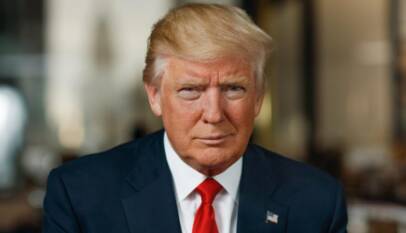

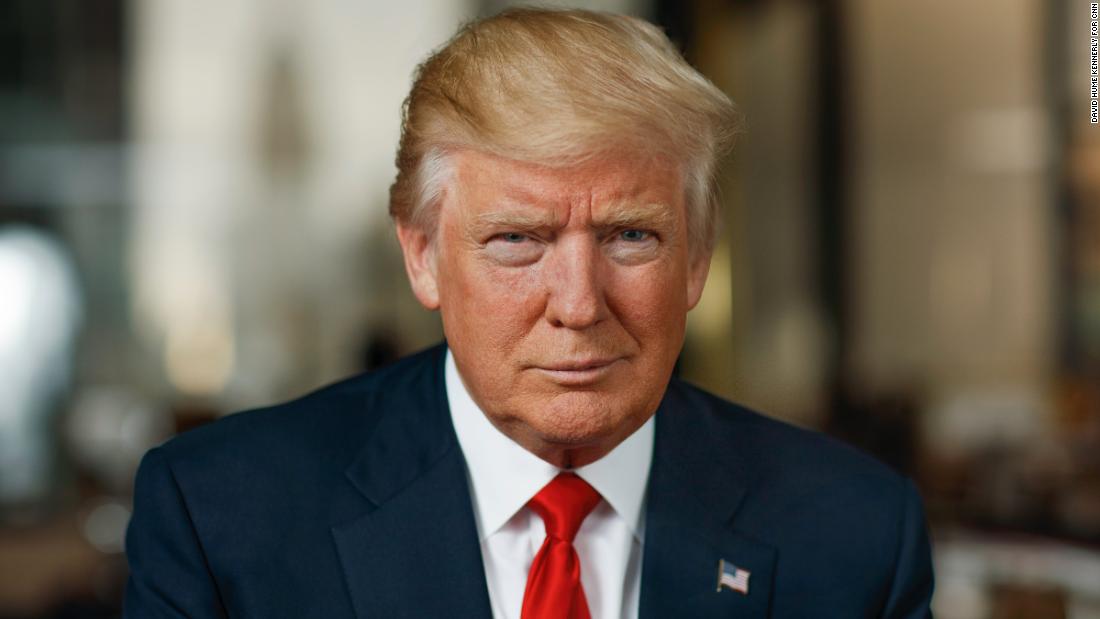
Photo: US President Donald Trump
By Austin Manekator
A diplomatic firestorm has erupted between the United States and Nigeria after U.S. President Donald Trump threatened potential military action over what he called the ongoing “killing of Christians” in the West African nation.
In a fiery post on Truth Social on November 1, 2025, President Trump declared:
“If the Nigerian Government continues to allow the killing of Christians, the U.S.A. will immediately stop all aid and assistance to Nigeria, and may very well go into that now disgraced country, guns-a-blazing, to completely wipe out the Islamic terrorists who are committing these horrible atrocities. I am hereby instructing our Department of War to prepare for possible action. If we attack, it will be fast, vicious, and sweet, just like the terrorist thugs attack our cherished Christians! WARNING: THE NIGERIAN GOVERNMENT BETTER MOVE FAST!”
The post triggered intense global debate, gaining millions of reactions within hours and amplifying international focus on Nigeria’s complex security crisis.
U.S. Secretary of War Pete Hegseth immediately endorsed the President’s position, posting on X (formerly Twitter): “Yes sir. The killing of innocent Christians in Nigeria and anywhere must end immediately. The Department of War is preparing for action. Either the Nigerian government protects Christians, or we will kill the Islamic terrorists who are committing these horrible atrocities.”
Among those who praised Trump’s statement was American rapper Nicki Minaj, who reposted his message and wrote: “President Trump’s words about the Christians in Nigeria made me feel a deep sense of gratitude. Every life matters, and I pray the world finally pays attention to this.”
Meanwhile, several U.S. lawmakers have maintained growing pressure on Nigeria. Senator Ted Cruz recently introduced the Nigeria Religious Freedom Accountability Act of 2025, asserting, “The Nigerian government has facilitated the mass murder of Christians. Tens of thousands have been killed, thousands of churches destroyed. There must be accountability.”
Representative Riley Moore also called for Nigeria to be re-designated as a Country of Particular Concern under U.S. law, claiming without proof: “Over 7,000 Christians have been killed in Nigeria in 2025 alone. Nigeria has become the deadliest place in the world to be a Christian.”
Other lawmakers, including Senator Jim Risch and Senator Ted Budd, echoed those sentiments. Risch posted that “Faith should never be a death sentence,” warning that Christians are being “hunted, butchered, and terrorized for their beliefs.” Budd led a bipartisan group urging Washington to reclassify Nigeria under the International Religious Freedom Act, condemning “unchecked acts of violence and terrorism against religious minorities.”
However, the Nigerian government has strongly rejected these allegations and Trump’s military threat. President Bola Ahmed Tinubu said that labeling Nigeria as religiously intolerant “does not reflect our national reality,” stressing that the country remains a democracy committed to constitutional guarantees of religious freedom.
The Ministry of Foreign Affairs, through spokesperson Kimiebi Imomotimi Ebienfa, reaffirmed Nigeria’s commitment to protecting all citizens regardless of faith. “These claims do not reflect the situation on the ground. Nigeria mourns all victims of violent extremism and remains committed to promoting tolerance among citizens,” the ministry stated.
Minister of Information Mohammed Idris also described U.S. Senator Ted Cruz’s claims of genocide as “false, misleading, and unsupported by credible evidence.” The House of Representatives rejected what it called “a misrepresentation of Nigeria’s security challenges,” insisting that religion is not the root cause of the country’s violence.
In another statement, the Federal Government reiterated that Nigeria “is resolute in tackling violent extremism and will defend all its citizens, irrespective of race, creed, or religion.”
As tensions rise, analysts warn that Trump’s “guns-a-blazing” rhetoric could strain U.S.-Nigeria relations, a partnership long anchored in security and economic cooperation. While American politicians frame their outrage as a defense of religious freedom, Nigerian officials argue it oversimplifies a crisis driven by poverty, banditry, and regional instability.
What began as a single Truth Social post has now evolved into a transatlantic confrontation testing diplomacy, faith, and global power. The coming weeks will reveal whether Washington chooses dialogue over domination and whether Abuja can restore international confidence in its capacity to protect all Nigerians. If handled poorly, this dispute could mark a turning point in U.S.-Africa relations, rewriting the script on how superpowers engage with the continent in an era of moral politics and military threats.