
Feat Raises Hope on Reusable Space Rockets
American Billionaire Elon Musk’s SpaceX made history on Sunday morning (ETA) when the starship rocket booster returned safely to its launch site after launching a spacecraft in Texas, United States of America.
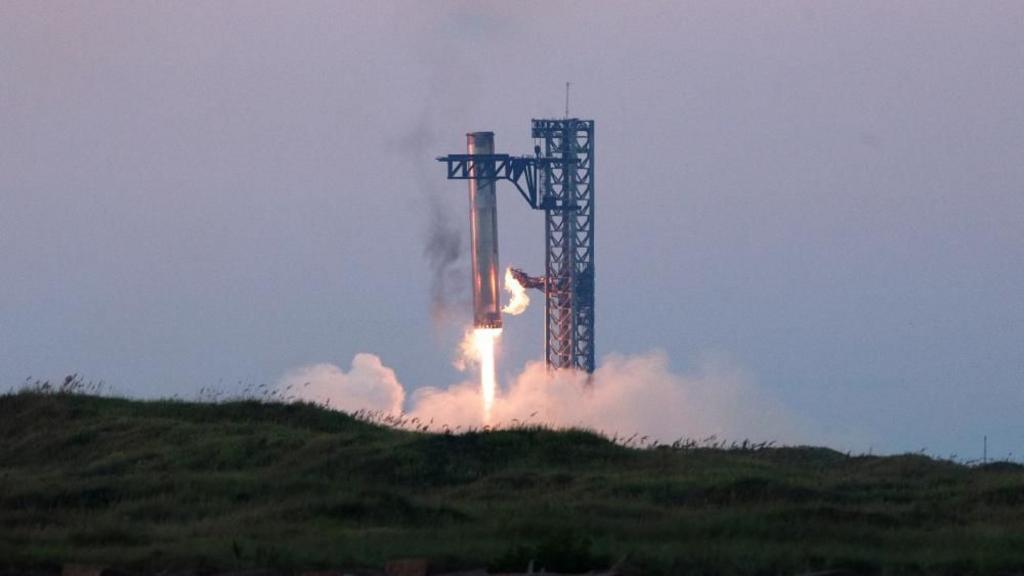
After takeoff, the bottom part of the starship (rocket booster) detached and returned and was successfully recaptured at the launch facility.
After reaching a speed of nearly 28,000km per hour, the booster slowed down, and did a black flip on its way before it was captured by robotic arms at the launch pad that is nicknamed ‘Chopsticks’.
It was the first time that a rocket booster would be safely received at the launch site by the enthusiastic SpaceX team instead of letting it crash into the sea.
The demonstration mission was unmanned, and it was an audacious maneuver that successfully brought over a 70-meter rocket booster back to its landing structure after using up its fuel and breaking away from the upper starship spacecraft.
Dr Megan Argo, a senior lecturer in Astrophysics, at the University of Central Lancashire, said, “It is really impressive that they got it right on the first attempt. Many things have to be in place to make that work.”
She expressed surprise that the SpaceX team got it right the first time.
Experts believe that Sunday morning’s success by SpaceX is a giant leap that could crash the costs of space exploration through reusable multimillion-dollar boosters.
How SpaceX Achieve a Milestone:
- * The Super Heavy rocket booster fired up its 33 engines at SpaceX’s launch facilities in South Texas just before 7:30 a.m. CT (8:30 a.m. ET.)
- After spending most of its fuel, the Super Heavy booster detached from the Starship spacecraft and steered itself back to the launch site — marking the first time that SpaceX has recovered the rocket after launch.
- SpaceX eventually hopes to refurbish and refly the Super Heavy booster and Starship spacecraft.
- The Starship vehicle went on to fire up its own six engines and continue soaring into space. The spacecraft coasted for a while before descending back to Earth, dragged down by gravity and enduring extreme temperatures and friction.
- The Starship reentered Earth’s atmosphere about 50 minutes after takeoff. The vehicle then attempted a belly flop manoeuvre — plummeting toward the ground horizontally — before using its onb engines to swoop back to a vertical orientation.
- Starship splashed down in the ocean, as expected.
- SpaceX did not intend to attempt to recover the vehicle after this flight.