
By Kennedy Francis with agency reports
What you need to know about the search for Pope Francis’ successor
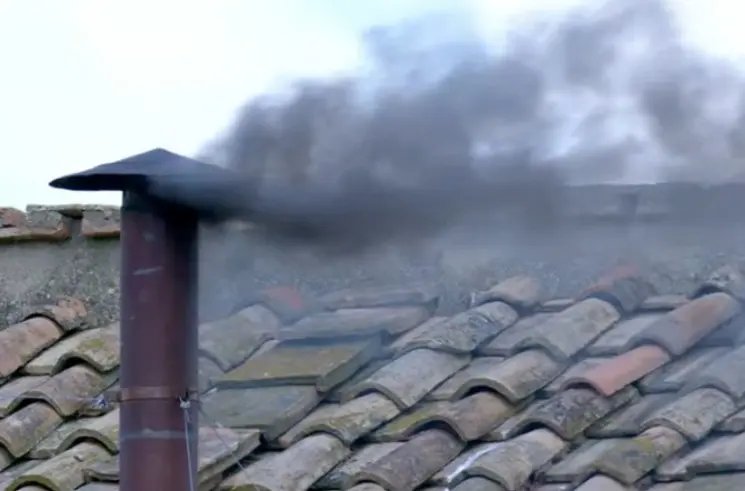
What is in a smoke? For the election of a pope, there is a lot of difference between a white and a black smoke. As the world turns its eyes once again to the chimney of the Sistine Chapel, the appearance of black smoke rising into the Roman sky continues to captivate global audiences. This simple yet profound ritual marks the suspenseful search for a new leader of the Roman Catholic Church — the successor to Pope Francis.
A Timeless Signal in a Digital Age
In an era dominated by instant updates and digital feeds, the centuries-old tradition of smoke signals from a Vatican chimney might seem anachronistic. Yet, during the papal conclave—the sacred gathering of cardinals in the Sistine Chapel to elect a new pope—black and white smoke remains the official sign conveying the world’s most anticipated decision.
Black smoke (fumata nera), which has already been seen during this conclave, indicates an inconclusive vote — the cardinals have not yet reached the required two-thirds majority. It is a message of waiting, reflection, and continued deliberation. Until white smoke appears, the Church remains in a moment of sede vacante — a vacant seat of Peter.
More Than Symbolism: A Message of Process
Beyond its symbolic weight, the black smoke carries a deeper meaning. It reassures the faithful that the process of discernment is ongoing, deliberate, and guided by prayer, not pressure. The cardinals are not rushing to elect a figurehead; they are engaged in seeking divine guidance for a global Church facing both internal transformation and external challenges.
Pope Francis, who passed away on April 21, 2025, at the age of 88, leaves behind a legacy of reform, humility, and renewed focus on the marginalised. His successor must not only inherit this vision but also navigate a world shaped by secularisation, shifting geopolitics, and increasing demand for accountability in Church governance. Each puff of black smoke reminds us that such a decision is not made lightly.
A Historic and Diverse Conclave
The 2025 conclave is notable for its unprecedented diversity and size. Of the 252 members of the College of Cardinals at the time of Pope Francis’s death, 135 were under the age of 80 and thus eligible to vote. However, two cardinals—Antonio Cañizares Llovera of Spain and John Njue of Kenya—are absent due to health reasons, bringing the number of participating electors to 133. This marks the largest number of electors ever to participate in a conclave.
Reflecting Pope Francis’s commitment to global representation, the 133 cardinal electors hail from 70 countries across all inhabited continents. The distribution is as follows:
- Europe: 52 electors (39%)
- Asia: 23 electors (17%)
- North America: 20 electors (15%)
- Africa: 17 electors (13%)
- South America: 17 electors (13%)
- Oceania: 4 electors (3%)
This composition underscores a significant shift from previous conclaves. Non-European cardinals now comprise a majority, highlighting the Church’s evolving global identity.
Notable Past Papal Elections
The 2025 conclave builds on a long and fascinating history of papal elections, some of which were as dramatic and consequential as today’s:
- 1978 (Pope John Paul II): After the sudden death of Pope John Paul I (who reigned only 33 days), Polish Cardinal Karol Wojtyła was elected, becoming the first non-Italian pope in 455 years and a pivotal figure in the fall of communism in Eastern Europe.
- 2005 (Pope Benedict XVI): Following John Paul II’s death, German Cardinal Joseph Ratzinger was elected in just four ballots, reflecting a relatively quick consensus. His scholarly approach shaped theological discourse but his later resignation shocked the world.
- 2013 (Pope Francis): Argentine Cardinal Jorge Mario Bergoglio became the first Jesuit, first Latin American, and first pope from the Southern Hemisphere. His election marked a significant shift toward humility, environmental focus, and social justice.
- 1268–1271 (Pope Gregory X): One of the longest conclaves in history, lasting nearly three years. The cardinals were eventually locked in and their food rations reduced until they made a decision — a practice that inspired the word “conclave” (from cum clave, meaning “with key”).
These milestones remind us that each conclave is not merely a ritual but a defining moment in Church history, often with global ramifications.
Innovations in Clarity, Tradition at Heart
To prevent past confusion, such as during the 1958 conclave when greyish smoke sparked premature celebration, modern conclaves now burn the ballots with specific chemical compounds that produce black or white smoke. In recent years, the Vatican also added the ringing of bells to accompany white smoke, ensuring no doubt remains when a new pope has been chosen.
Yet despite these enhancements, the ritual retains its core spiritual essence. For Catholics around the world, each appearance of black smoke serves as a collective moment of prayer and anticipation, connecting millions in silent vigil.
Waiting on White Smoke
As the cardinals return for another round of voting, the black smoke that continues to rise over the Vatican is not a sign of failure—it is a testament to the weight of the decision. It reflects the seriousness with which the Church seeks to choose not just a leader, but a shepherd for over 1.3 billion Catholics.
Until the white smoke curls into the sky and the bells ring joyfully across St. Peter’s Square, the world watches, waits, and wonders: Who will be the next Bishop of Rome?