

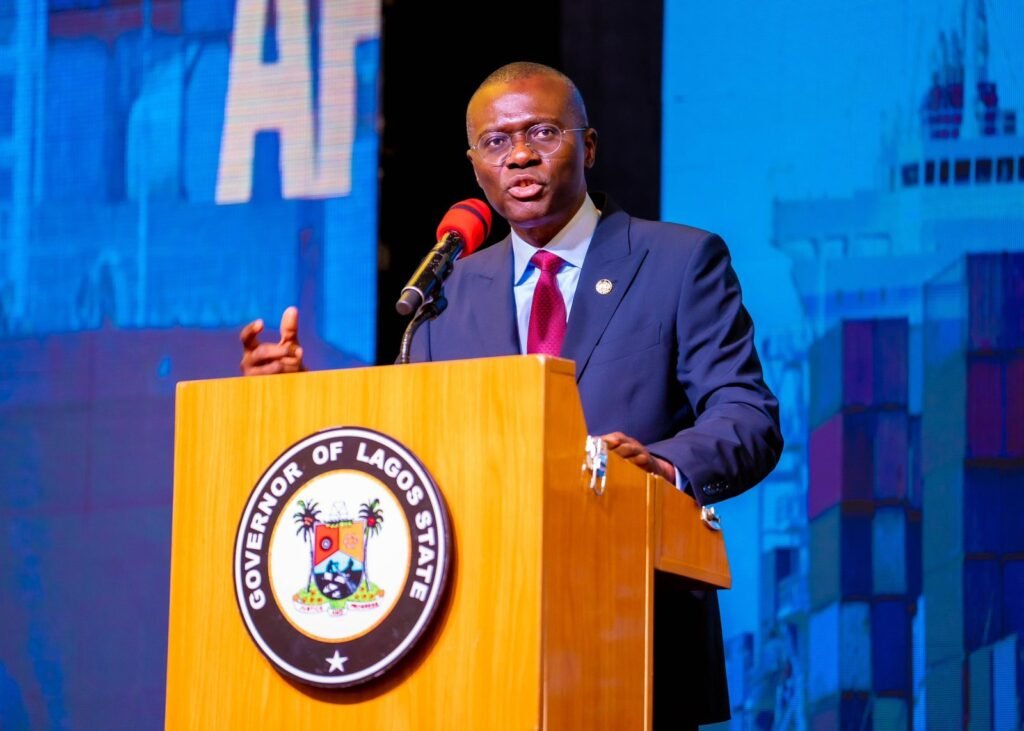
Lagos State accounts for 26% of the N4.002 trillion owed by Nigeria’s 36 states and the Federal Capital Territory (FCT) as of Sept. 30, 2025, underscoring the concentration of subnational debt in the country’s commercial hub, according to data released by the Debt Management Office (DMO).
With a debt stock of N1.045 trillion, Lagos remains by far the most indebted state, reflecting its aggressive infrastructure financing and expansive urban development projects.
Overall, subnational debt represents 2.61% of Nigeria’s total public debt of N153.29 trillion during the same period, with the federal government accounting for the majority of the national debt burden.
Borrowing among states remains heavily concentrated. Ten states account for 67% of the total subnational debt, amounting to N2.68 trillion.
Rivers State ranks a distant second behind Lagos with N381.205 billion, followed by Delta State at N247.171 billion. Enugu State’s debt stands at N194.715 billion, while Ogun and Bauchi states owe N168.093 billion and N158.197 billion, respectively.
Niger State has a debt profile of N143.469 billion, while Cross River and Benue states owe N141.941 billion and N107.254 billion. Akwa Ibom closes the top 10 list with N95.506 billion.
Analysts say Lagos’ outsized debt profile reflects its large revenue base and capacity to access credit markets, but it also highlights broader fiscal pressures facing state governments amid infrastructure gaps, weakening oil revenues and rising borrowing costs.
Economists warn that while debt can support development when prudently managed, rising servicing costs could crowd out spending on social services, particularly in a high-interest-rate environment marked by naira volatility.
The DMO has continued to stress prudent borrowing and improved internally generated revenue (IGR) to mitigate risks associated with mounting subnational debt.
