

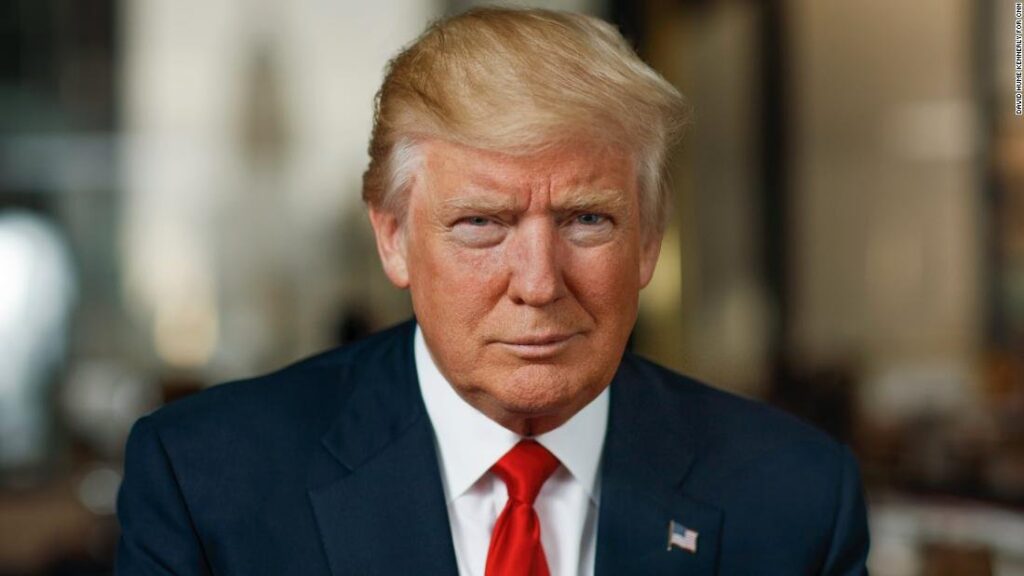
US President Donald Trump on Saturday claimed that American forces had captured Venezuelan President Nicolás Maduro following overnight air strikes on Caracas and other cities, a development that marks a sharp escalation in the long-running confrontation between Washington and the Venezuelan government.
Residents of the Venezuelan capital were awakened around 2:00 am local time by loud explosions and the sound of helicopters as strikes hit several targets, including a major military complex and an airbase. AFP journalists reported that the bombardment lasted for nearly an hour.
In a post on his Truth Social platform about two hours after the attacks began, Trump said the United States had carried out a “large-scale strike” against Venezuela and that Maduro and his wife, Cilia Flores, had been captured and flown out of the country.
US Attorney General Pamela Bondi later said in a post on X that Maduro and his wife would face trial in the United States on drug trafficking and terrorism-related charges. Deputy Secretary of State Christopher Landau described the development as “a new dawn for Venezuela,” adding that “a tyrant is gone.”
The Venezuelan government swiftly condemned what it called an “extremely serious military aggression” by the United States and requested an emergency meeting of the United Nations Security Council. Speaking to state television by telephone, Vice President Delcy Rodríguez said she did not know Maduro’s whereabouts and demanded that Washington provide proof that he was alive.
Maduro, who has ruled Venezuela for 12 years, was re-elected in 2024 in a vote widely rejected by much of the international community as fraudulent.
Russia, a key ally of Caracas, condemned the strikes as “armed aggression” and demanded immediate clarification on Maduro’s fate. US Senator Mike Lee said Secretary of State Marco Rubio had told him that Maduro would stand trial in the United States, where he is wanted on drug-related charges.
Trump announced plans to address the situation at a news conference later on Saturday at his Mar-a-Lago residence in Florida. Venezuelan opposition leader and Nobel Peace Prize laureate María Corina Machado had not commented publicly by Saturday afternoon, though she had written days earlier that she believed 2026 would mark a turning point for Venezuela’s freedom.
Trump later described the operation as “brilliant” in a brief interview with The New York Times, praising the planning and the troops involved. Reported targets included Fort Tiuna, Venezuela’s largest military complex in southern Caracas, the Carlota airbase in the north of the capital, and sites in La Guaira, home to the country’s main airport and port.
Residents described scenes of fear and confusion as the strikes unfolded. Some said the explosions shook buildings, while others gathered essential items and prepared to flee. The defence ministry accused the United States of hitting residential areas and announced a massive military deployment.
Iran and Cuba condemned the attacks, while Colombian President Gustavo Petro criticised the strikes and said troops were being deployed to Colombia’s border with Venezuela. The European Union’s top diplomat urged restraint in talks with US officials, and Spain offered to mediate.
No official casualty figures were immediately available. Social media reactions were sharply divided, with some users celebrating Trump’s claim that Maduro had been removed from power, while others condemned the action as dangerous and destabilising.
The strikes followed months of heightened tension, during which the US deployed naval assets to the Caribbean, imposed additional sanctions, seized Venezuelan oil shipments and accused Maduro of leading a major drug trafficking network — allegations Caracas has repeatedly denied, insisting that Washington’s actions are aimed at forcing regime change and gaining control over Venezuela’s vast oil reserves.
AFP
